新闻动态

News

Follow us.:Home> Why Calcium Carbonate Needs Surface Coating Modification

Why Calcium Carbonate Needs Surface Coating Modification

Time:2026-05-20
Why Calcium Carbonate Needs Surface Coating Modification

powder surface modification machinesurface modification
Calcium Carbonate

Calcium carbonate is an inorganic compound and the main component of limestone, marble and other raw materials. When it comes to calcium carbonate powder modification, many customers wonder why extra production costs are spent on surface modification, and whether such treatment will affect the original service performance of downstream finished products. Cronus hereby elaborates on the reasons for surface coating modification of calcium carbonate.

Basic Introduction of Calcium Carbonate

Surface coating modification is a vital method to improve the service performance, compatibility and expand application scope of calcium carbonate. After surface coating treatment, traditional filler calcium carbonate is transformed into multi-functional modified auxiliary agent with wider application range and higher practical market value.

Five Core Reasons for Calcium Carbonate Surface Coating Modification

Improve Dispersion Performance:Modifiers are directionally adsorbed on calcium carbonate particle surfaces to endow particles with electric charges. Homonymous charges repel each other, effectively preventing particle agglomeration and caking, and achieving excellent dispersion effect.

Enhance Interface Compatibility:Surface modification boosts the interfacial compatibility and affinity between calcium carbonate and organic matrices, thus optimizing the overall performance of finished products when applied in rubber, plastics and other composite materials.

Reduce Oil Absorption Value:Modification effectively relieves particle agglomeration and greatly improves dispersibility. Modifier molecules evenly wrap particle surfaces and fill internal gaps. Meanwhile, surface polarity is weakened with lower inter-particle friction and better lubricity. Particles are arranged more closely with higher bulk density, which substantially cuts down the oil absorption value of powder materials.

Expand High-end Application Markets:Modified calcium carbonate is widely applicable to high-end industries including plastics, coatings, rubber, papermaking, sealants and transparent films. It improves the quality of end products and helps enterprises cut down overall production costs.

Endow Diversified Functional Properties:Metal-coated light calcium carbonate can confer special properties on rubber products. Calcium carbonate coated with titanium dioxide can partially replace titanium dioxide raw materials. Powders treated with phosphate, aluminate, silicate, barium salt and other reagents can be made into acid-resistant calcium carbonate powder.

Modification Principle of Calcium Carbonate

Calcium carbonate is an inorganic material that easily binds with hydrophilic groups of modifiers to form quasi-chemical bonds, while lipophilic groups arrange outward to form a monomolecular coating film on particle surfaces.

This structure greatly enhances the dispersion and affinity of calcium carbonate in polymer matrices such as polyolefin, and forms stable interfacial interaction with macromolecular substrates, which is the basic production principle of active calcium carbonate. After modification, hydrophilic powder turns into lipophilic material with excellent compatibility with resin and other organic materials, comprehensively optimizing various application properties.

Application Fields of Coated Modified Calcium Carbonate

Coated calcium carbonate has extensive applications covering food additives, coatings, rubber fillers, plastics, cosmetics, pharmaceuticals, building materials, environmental protection and other industries.

  • Coating Industry: Serves as special coating filler to strengthen coating firmness and durability, and improve hiding power and stain resistance.
  • Food Additives: Improves food hardness, stability and anti-delamination performance, regulates pH value and optimizes taste.
  • Rubber Industry: Increases hardness, wear resistance and tensile mechanical properties of rubber products.
  • Plastic Industry: Acts as plastic filler to enhance hardness, toughness and heat resistance of plastic products and reduce production costs.
  • Cosmetic Industry: Makes cosmetics delicate, smooth and easy to spread, increases paste consistency and reduces greasy feeling.
  • Pharmaceutical Industry: Used as filler and stabilizer to enhance drug stability and solubility, and assists in relieving osteoporosis and excessive gastric acid.
  • Building Materials Industry: Works as reinforcing filler to improve hardness, waterproof performance and service life of building materials, suitable for making oil materials, slurry and cement products.
  • Environmental Protection Industry: Applied to acidic soil improvement and acid rain treatment to neutralize acidic substances and adjust pH value of soil and water bodies.

Common Surface Modifiers for Calcium Carbonate

Common organic modifiers are mainly divided into surfactants, coupling agents and polymer modifiers.

  • Surfactants: With both hydrophilic and lipophilic groups, they act as bridges to connect inorganic powder and organic matrices. Typical types include stearic acid, phosphate ester and quaternary ammonium salt.
  • Coupling Agents: Containing polar and non-polar structures, their two ends can combine with inorganic powder and polymer matrix through physical winding or chemical reaction. Common varieties are silane coupling agent, titanate coupling agent and composite coupling agent.
  • Polymer Modifiers: Form core-shell polymer coating layers on calcium carbonate surfaces to reduce agglomeration and strengthen dispersion, mainly including oligomers, high polymers and water-soluble polymers.

Mainstream Calcium Carbonate Coating Equipment

  • Vortex Mill Coating Machine: Completes material mixing, grinding and surface modification via high-speed rotating impellers and airflow. Its coating rate reaches over 98%, up to 99% for some models.
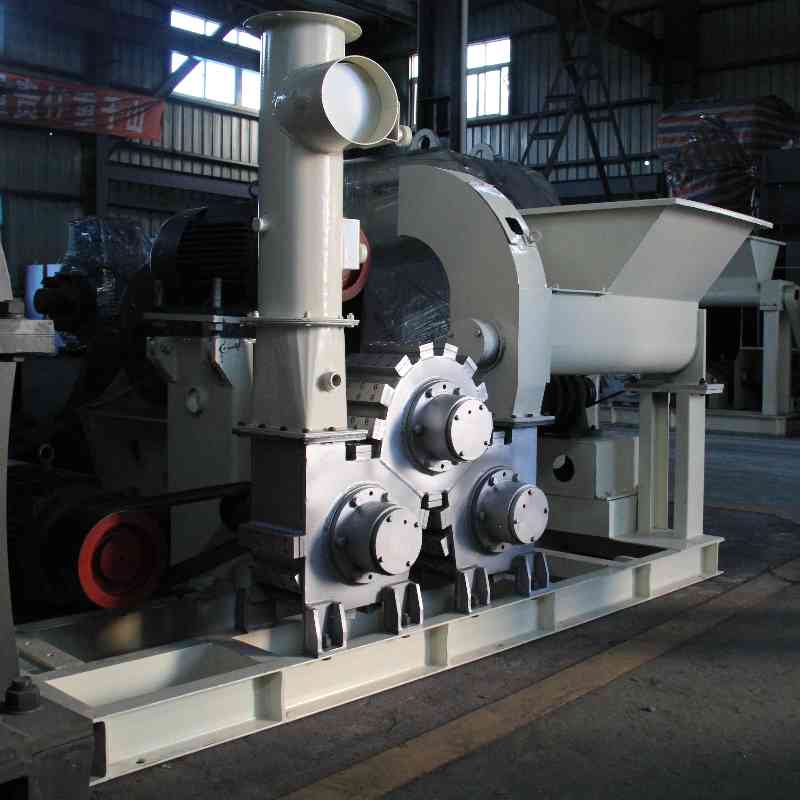
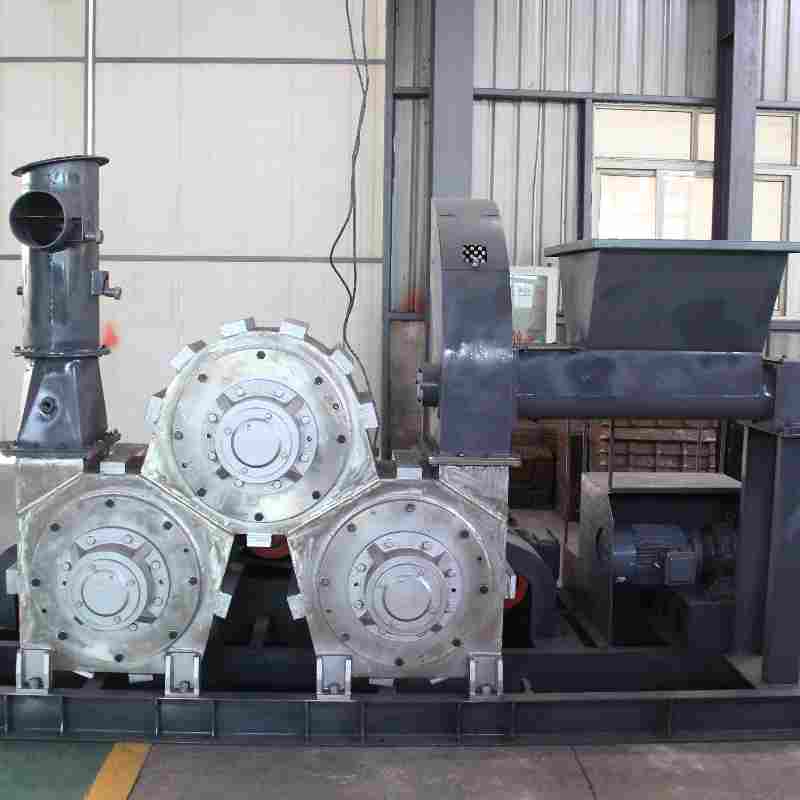
  • Three-roller Coating Machine: Widely used in industrial production. It changes internal vortex flow through three groups of rotating rotors to realize continuous large-capacity production with coating rate above 95%.
  • High-speed Mixing Coating Machine: Features compact vertical structure, small floor area and low energy consumption. High-speed rotating blades generate centrifugal force to fully mix calcium carbonate powder and modifiers for uniform coating modification.

Selecting suitable modifiers and coating equipment can equip calcium carbonate powder with superior properties and further expand its market application prospects.

05